 | ||||

|
 |
 | |
I'm David Hite, PhD, a member of the American Association of Diabetes Educators. I provide Diabetes Education classes for a large non-profit healthcare organization in Sacramento, California. I know that it's unlikely that you will ever attend my diabetes class in person at the clinic, so I've created this Diabetes Basics: Questions and Answers resource to help you better understand Type-2 Diabetes, and learn how you can take control of your diabetes or offer needed help to a friend or loved one who may be struggling to avoid the medical complications that often come with this disease. These Frequently Asked Questions are also useful to those of you who have pre-diabetes and want to reverse those symptoms and avoid progression to diabetes. Good health. Live well. For my non-english speaking readers use this translator.
Questions and Answers about Diabetes Self-Care
Diabetes is a chronic condition. It's not yet curable. But there are some proven methods that will help you stay healthy and reduce your risks of diabetic
complications. Your doctor is a very important part of staying
healthy, so visit and have blood tests 2-3 times each year so you
can spot potential problems early and make sure you're still on
track. But also understand that what you do for yourself when you leave the
doctor's office is just as important as anything your doctor can do. The
method I've developed is called the
5Ms of Diabetes Self-Care. It's a plan that allows you to take personal control of your diabetes by following the methods outlined below. It's not simple and there are no magic cures or short cuts. Diabetes is a complex and frustrating medical condition. There's a
lot to learn, but the more you know, the easier it will be to stay
healthy. I hope this resource helps answer some of your questions and
sets you on the road to good health. Insulin, the key to the door, is normally released by the
pancreas every time blood sugars begin to rise. The more glucose in
the blood, the more insulin has to be produced so you can properly
absorb the sugar. Diabetes occurs when a person is no longer able
to produce enough insulin or the insulin that is produced is
ineffective in delivering glucose into the cell.
Doctors conducting research into the cause have uncovered a promising link between a viral infection and type-1 diabetes. In one recent study 83% of children newly diagnosed with type-1 showed the presence of an enterovirus in the mucus lining of the gut. Only 7% of healthy children had the virus. This is certainly not conclusive evidence, there are no doubt other factors involved, but this discovery is a hopeful sign that one day early signs of risk can be identified and corrective measures taken before the insulin producing cells in the pancreas are destroyed. Follow this link to read the research study. Type 1 Diabetes is Associated with Enterovirus Infection in Gut Mucosa.
Trapped glucose in your blood indicates that your body has lost its ability to properly absorb the fuels you eat. A 12-hour fasting blood sugar test is the standard diabetes screening test. The normal amount of glucose found circulating in the blood 12 hours after eating is normally 99 or less (measured in milligrams of glucose in each deciliter of blood). Glucose levels in the 100 to 125 range indicate that your body is struggling to control blood sugars and is called 'pre-diabetes'. A level of 126 or higher in two separate tests, or a single reading above 200, establishes the clinical diagnosis of diabetes. Your doctor may order a Glucose Tolerance Test to better assess how well your body reacts to a load of glucose. Blood sugars above 200 two hours after drinking 75 grams of glucose indicates diabetes. A reading between 140-199 indicates pre-diabetes. A reading below 140 is considered normal.
What does seem clear is that a sedentary lifestyle, and years of eating diets loaded with sugars, refined carbohydrates, and unhealthy fats (animal and trans-fats), causes us to gain weight, especially in the belly. This accumulated fat may simply gum up the doors to the cells. This puts so much pressure on the pancreas that it wears out prematurely. Your pancreas has been working overtime, probably for many years, making extra insulin to keep your blood sugar down. It's only after the pancreas tires and begins to slow down, a condition called "insulin fatigue," that blood sugars begin to rise and diabetes is diagnosed. Focus now on reducing insulin resistance to reduce the pressure on your pancreas. This may help preserve its function and prevent further damage.
Note-I want to stress to my readers that this surgery should not be taken lightly. It is irreversible and not without risk of post-surgery complications. It should only be considered when all other health related factors indicate that a patient has greater health risks without the surgery.
Remember that this test also tells us that the protein structure of your blood vessels themselves is being damaged in the same way, and it's this high level of blood vessel damage that leads to diabetic complications. I like to use rusting to describe what goes on in your blood when glucose levels are not controlled. Rusting is a slow destructive process that takes time to develop and is easy to overlook. But if allowed to progress unchecked, it can cause the eventual destruction of things like a bike or mower. Knowing this, we protect our possessions by keeping them out of the elements. That way we reduce the risk that rust is going to do any serious damage. In the same way knowing how to use the 5M's of diabetic self-care to help self-regulate your blood sugars and keep them in a healthier range, you'll be able to avoid most of the corrosive damage associated with diabetes and lower our risk of complications. A healthy hgbA1c for a person with diabetes is somewhere below 7%. That means blood sugars are averaging about 155. This is still in a range that is considered diabetic, but research shows that when corrosive damage is kept low like this, your body can keep up with the repair to your blood and blood vessels and the risk for diabetic complications is significantly lower. So it's fair to say that it's uncontrolled diabetes that leads to damage and failed health, because the damage is happening faster than your body can repair it. The graph below shows how the risk of complications increases as
blood sugar rises. Work hard to keep your hemoglobin A1c below 7%
and you will most likely avoid severe diabetic
complications. 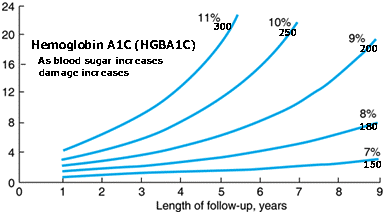
*** Rule of 15 - Low blood sugar is more immediately dangerous than a mildly elevated reading. If your blood sugar is less than 80 when you check, it's time to eat something. If your sugar reading is less than 70 or you're experiencing symptoms and feeling shaky, sweaty or weakness, eat 15 grams of fast acting sugar (30 grams if it's below 50), such as 1/2 can of regular soda, or half a glass of orange juice or 4 glucose tabs, available at any drug store, then check again in about 15 minutes. If it's still low take 15 more grams. The general rule is that 15 grams of sugar should raise your blood sugar about 50 points, so don't overdo it (a full can of soda has 40 grams of sugar!). After your blood sugar reading is over 80 or symptoms subside, eat a small snack with some protein in it to keep your glucose level stable.
This is why diabetes is classified as a metabolic disorder. Your body isn't metabolizing or "burning" your food properly.
The exciting part of this news is that the balance of these gut bacteria is largely determined by factors in your environment; the misuse of antibiotics which kill the good bacteria along with the bad, and your diet. 'What you eat is proving to be one of the major determinants of...the community of bacteria living in your intestine,' says microbiologist Justin Sonnenburg of the Stanford University School of Medicine. We have some control over these factors! If this new research proves to be true, then the use of prebiotics, foods that encourage the growth of good bacteria, and a good probiotic supplement, which contains live "good guy" bacteria, might help influence this balance of power and help swing us back to a healthy state. Active culture yogurts, now being heavily advertised, also contain these good bacteria; however these so called low-fat treats are certainly not low in sugar. A small serving contains about 6 teaspoons of sugar. I advise my patients to try an active culture Greek yogurt or find a healthier probiotic source. Culturelle, containing the bacteria Lactobacillus rhamnosus GG and Align which contains Bifidobacterium infantis are two such brands. A product named VSL#3, a high dose blend of 8 probiotic strains, is designated as a “medical food” used in treating medical conditions such as ulcerative colitis rather than a nutritional supplement for general health. It is intended to be used under the supervision of a registered dietician or physician, however it is sold over the counter. Probiotics are often recommended to patients who have recently taken antibiotics to rebalance the gut. So in the end, we really are what we eat, and the microbes in our gut eat what we feed them, so feed the good guys and starve the bad guys by eating healthy! To learn more about this new research click on these links: Bacteria and Obesity, and this one: Gut Flora (scroll down to read the section on obesity), and finally this new article from July 2010 Newsweek magazine: How bacteria could make you fat.
One very good reduced carbohydrate plan comes from the Mayo Clinic. It's based on their "Healthy Weight Pyramid" that emphasizes not only a healthy diet, but also exercise, weight loss and health promotion. The diet itself recommends filling up on vegetables, whole fruit, high fiber carbohydrates and healthy fats. This diet is not specifically designed for diabetics however, so I think you should be prudent and limit your intake of fruit (A word of caution here; there has been "fake" mayo clinic diets around for some time. These diets are not associated with the actual Mayo Clinic and are what I would call "fad" diets not based on healthy eating principles). You can read more about the Mayo Clinic approach at their official website: Mayo Clinic Diet. Another popular diet that might produce similar results is the South Beach Diet. It's a lower carbohydrate diet that encourages eating lean protein, healthy fats, and high fiber natural "good carbs". I think on balance it offers a sensible lower carbohydrate plan.
One way to combat this blood sugar "traffic jam" is to increase the fiber in your diet by eating fresh vegetables; beans, legumes, peas and lentils, and maybe a piece of whole fruit each day. Eat brown rice instead of white sticky rice or a whole grain pasta like those from Dreamfields. Switch from white potatoes to a red skin potato, new potato, or try a yam or sweet potato and see how each affects after meal blood sugars. If you like cereal for breakfast, be sure to stay away from sugary brands and instead choose whole grain and bran cereals, or steel cut oats instead of instant. These natural, high fiber carbohydrates take longer to digest and enter the blood, reducing that after meal blood sugar spike. Another trick is to eat your starches al dente, or slightly chewy. Undercooking starches helps keep the starch from turning gooey and breaking down right in the pan. Aim for 30-35 grams of fiber per day, but add it slowly, maybe 5 grams at a time, and note your body's response. Fiber helps to keep you regular and avoid constipation, but too much fiber too quickly may cause gas, bloating or diarrhea. Plants, natural sources of fiber, are of course best, (remember this is the food supply for those healthy bacteria) but you can add additional fiber in supplement form like Benefiber, or Metamucil. They have soluble fiber which also helps lower your cholesterol. Here's a link to a good article on the importance of fiber in the diet. A Tale of Two Fibers.
This idea is better known as Glycemic Index, and though dieticians in this country have been slow to embrace it, I think it offers a good strategy to follow if you're struggling with your meal planning. The idea is based on a simple observation: Foods don't digest and supply usable energy at the same rates. Some foods digest slowly and some digest quickly. The concept might be more obvious to you if you think about starting a fire in your fireplace. You know to be careful with lighter fluid because it burns so quickly. Kindling burns slower but helps to stoke the fire and get it going and a log or coals burn most slowly and provides slow continuous energy. In the same way we need to find a healthy balance in the types of foods we eat. Choose to eat the right balance of foods so your body is supplied with the type and the amount of energy we need; Lean protein and healthy fat will provide you with steady energy so you feel full and satisfied, complex carbs will stoke your internal fire and give you energy when you need it. And fast burning sugars? Well, unless you're training for a marathon, those are troublesome and you're going to have to go easy. Let's discuss protein in more detail. Protein is not a primary energy food so it doesn't raise blood sugar very much. It's what we're made of; muscle, skin, hair, blood, brain, bone, and all of our internal organs are made of protein. So when we eat protein we do so primarily to bring in building supplies for growth and repair. All protein is made up of building blocks called amino acids. Just as words are formed with the 26 letters in the alphabet, all known proteins, plant and animal, are made from these 21 different building blocks. Each protein differs only in the type, length, and arrangement of its amino acids (Normal hemoglobin, your blood protein, for example contains 574 of these amino acid building blocks in precise sequence. One error in the sequence leads to a blood disorder called sickle cell anemia). Protein supplies us with four calories of energy per gram, the same as carbohydrates, but protein is so complex it requires more time for digestion (imagine the time it takes disassembling a toy Lego castle so that you can rearrange the pieces to make a Lego fort). Protein burns slowly providing that satisfying full feeling longer. This is the food that "sticks to the ribs" and helps stabilize blood sugars. Every meal should include some high quality lean protein. Protein in the meal will slow the absorption of the carbohydrates helping to reduce after meal blood sugar spikes (The same way food in the stomach slows the absorption of alcohol). If you are thinking of adopting a plant based diet (vegetarian/vegan) be aware that plants have "incomplete" proteins, meaning that each plant protein is missing one or more of the required amino acids to build human protein. This deficiency is easily overcome by "widening your search". It simply requires a wider variety of choices to "complete" the job of building our body's protein structure (for example eat: nut/seed, bean/rice, quinoa/different bean, etc). Once all of the amino acid pieces are available the protein that's made is the same regardless of where they came from. A well balanced plant based diet provides all of the amino acid building blocks needed for growth, repair and overall good health. Good sources of plant based protein are whole grains, beans (and tofu), peas, lentils, nuts and seeds. In addition to these protein sources, omnivores and "flexitarians" add food choices like low-fat dairy, Greek yogurt, cheese, and lean meats like fish and skinless chicken or turkey to provide protein for the diet. A healthy diabetic diet will average about 20-25% protein to account for the lower carbohydrate intake. A word of caution here however, if you're suffering from kidney disease your protein intake will need to be lowered to accommodate decreased function. Ask your doctor to be sure exactly how much protein you should include in your diet. Beef and pork, like all meats, are high in protein, but experts have long urged people to avoid or reduce "red meat" intake because of the observed association these meats have with high cholesterol, heart attacks and poor overall cardiovascular health. Certainly an association is not the same as a cause, so many were not persuaded. A recent scientific study however has finally found a biological mechanism that could explain how this might happen. The story takes us back to our gut where our bacterial colony is being nourished by the food choices we make. Different organisms prefer different foods including the bacteria in our gut. The researchers were investigating a chemical called trimethylamine oxide (TMAO) known to negatively affect cholesterol levels and cause damage to the smooth lining on the inside of our arteries causing scars that then allows cholesterol to stick and begin to build up. They found that among people who eat a 'western diet' there is a certain type of gut bacteria that feeds on a substance called L-Carnitine and converts it to TMAO causing levels in the blood to rise. So let's look at where carnitine is found.
Red meat has loads of carnitine! When meat eaters were fed beef or a carnitine supplement common in many energy drinks (L-Carnitine), their blood levels of TMAO went up. Researchers wanted to be sure of what was causing the change in TMAO levels so the group was then given a course of antibiotics to kill all of the gut bacteria. This time when the same test subjects were retested with beef or a carnitine supplement TMAO levels did not go up (the carnitine loving bugs in the gut were killed by the antibiotics). Interestingly when vegetarians/vegans were fed the same foods, there was no rise in TMAO. It seems that people eating a plant based diet have literally starved this type of bacteria to death. This research is very new (June 2013). Since we need carnitine in the body, (we make all we need) more research is necessary to firmly establish a causative link to heart disease. It may well be that the damage to blood vessels is caused from surges of carnitine from heavy red meat consumption. Maybe one day we will find a way to selectively rid ourselves of this carnitine loving gut bug, but for now it might be a good idea to pass on the beef and pork and eat a plant based diet or if you choose to eat meat, stick to chicken, turkey and fish with their lower levels of carnitine. Here is the link to an interview with the author of the study Dr. Stanley Hazen from the Cleveland Clinic. Red Meat's Heart Risk Goes Beyond The Fat .
The average American brings in about 40% of their calories from fat, and most of that is from unhealthy sources. I think 30-35% is a better number and remember these should come from healthy sources. Natural fats from plants in the form of oils should be the main source of fat in our diet. Olive oil, Canola oil (Canadian Oil Low in erucic Acid: from the rapeseed plant), the oils from nuts and seeds, omega-3 oils, and yes, even avocados are cholesterol free and full of healthy fat. They're easy to digest and use for fuel rather than storing around the waistline. Peanut butter is a great snack, but be sure to get the natural kind with oil on the top (Jif and Skippy have sugar added). Make room in your diet for these healthy fats by getting bad fats out!
While trans-fats have no cholesterol themselves they do cause your bad cholesterol to go up, your good cholesterol to go down, and also increase insulin resistance and blood vessel inflammation that leads to an acceleration of the diabetic complications we discussed earlier. In January of 2006 the U.S. government began requiring that food labels show the amount of trans-fat in all packaged goods (although less than .5 grams can be counted as zero). Fast food restaurants however have been slow to get the message and are probably the greatest source of these artery-clogging fats. Bad idea. Avoid them! If you're unconvinced about this or need reminding, play this clip from the documentary Fast Food Nation, or this clip from the movie Super Size Me. It's a real eye opener. It's about a young man who ate three meals a day from McDonalds for a full month. Not a happy ending. Trans-fats really need to be avoided in all foods. Read food labels and choose wisely.
Margarines on the other hand are made from liquid vegetable oils, which have no cholesterol. The problem here is that these oils are being hardened into a spreadable form. It's this process of artificial hardening called hydrogenation that turns them into unhealthy trans-fats (Remember stirring the yellow food coloring into Oleo). Manufacturers of margarines however are trying to make healthy changes. New spreads that don't use trans-fats are appearing on the market and these may be healthier choices. Look on the label before you buy and choose brands that use healthy fats. Benecol or Smart Balance are examples of these.
Make a list before you go and be careful of adding 'impulse items' while you are shopping. Heeding the old saying "shop around the outside of the market" is pretty good advice. Compare labels and try to make better choices. Look for fiber (3 grams or more per serving), fat (3 or less grams per serving), and Total Carbohydrate. Remember the word starch is not found on the label. The amount of starch in each serving is the difference you get after you subtract fiber and sugar from the total carbohydrate. The most important tip is to buy fresh natural whole food whenever possible. Restaurant meals are much too large to be eaten all at one sitting. Don't eat large meals! Besides raising your blood sugars, heartburn and related conditions are made worse when you eat too much because abdominal fat doesn't allow room for your stomach to expand very much. The pressure created on the stomach causes food to be forced back up into your throat where sensitive tissue is burned by stomach acid. You can protect against 'portion distortion' by asking for a carry-out box when your meal is brought to the table. Divide the portion before you start eating and you won't struggle with the issue of when to stop eating (out of sight, out of mind). Of course if you are with someone, simply sharing one meal is a great solution to portion distortion. Restaurant food is usually loaded with salt. Salt won't affect your blood sugar, but it may affect your blood pressure. Don't be shy about asking the waiter for lower salt versions. Many restaurants have tried to accommodate health conscious customers by noting on the menu that a meal is heart healthy, or by adding senior sized meals.
Of course you don't sit or sleep every minute of the day, so each minute that you're more active you're burning more than one calorie per minute. Walking burns about 5-7 calories per minute and more vigorous activities burn even more, perhaps 10-15 calories per minute. Remember seeing what the Olympic swimmer Michael Phelps ate? He needed 7,000 calories a day to meet his metabolic needs. Now that he's retired and only playing golf, he has to cut back and eat only what his less active body needs. You need to find the range that meets your caloric needs. I'm guessing that for most of you it will be between 1,500 and 1,800 calories per day. This amount is enough to supply good balanced nourishment, and also enough food that you don't feel deprived. Never eat less than 1,200 calories each day unless you are under direct care from a medical doctor or registered dietician. Don't try to starve yourself! Diets that are too strict are destined to fail because they are so restrictive it's virtually impossible to stay on them very long. Most dieticians recommend carbohydrate counting and limiting intake to 45-60 grams of carb in each of 3 meals with perhaps one 15 gram snack. This recommendation is usually pretty close and can be helpful in making better choices when comparing labels. I like a more personalized approach. Here's a way you can see if your meals are balanced as to carb-protein-fat content and are the proper portion size. Check your blood sugar before you eat and then again 2 hours after your meal. Your blood sugar goal before meals is 70-130. Two hours after a meal your target is to be less than 180. Check like this often to satisfy any doubts you have and learn which meals are well balanced, and which recipes need to be re-worked by perhaps lowering the carbohydrate amount, changing the type of carbohydrate, or simply reducing the portion size.
All in all, I think that sugar substitutes like Sweet-n-low, Equal (NutraSweet), or Splenda, as a way of cutting back on sugar, can play a useful role in your diet if used in moderation. Some concerns have been raised about their long-term safety. Aspartame, the sweetener found in Equal(NutraSweet), is chemically unstable when it gets hot, causing it to break down into harmful byproducts. I personally don't think the evidence they cause harm is strong enough that they need to be totally avoided, but if you believe you're having side-effects like headaches or body aches, stop using them altogether. Of the three products available on the market, I think sucralose, sold under the brand name Splenda, is the better choice. The main advantage is that it's chemically stable and won't break down even when you cook with it. This can really help those of you who are trying to prepare satisfying meals for a family. I also think it has a more natural taste, so no one is likely to notice the substitution. Water is the drink that quenches thirst, but daily coffee or tea with a sweetener or a diet soda once in a while as a treat, is not likely to cause any problems. Multiple diet sodas a day is way too much and not a healthy habit. Remember the bacteria in your gut are being dosed with these chemicals too. Another group of sweeteners, sugar alcohols like xylitol, sorbitol or maltitol, are digestible and will raise blood sugars some, though usually half as much as sugar itself. The thing to be careful of is how much you're getting. Some sugar alcohols have a significant laxative effect and some people are very sensitive to them (even sugarless cough drops have a warning on the label). If you have bloating or diarrhea after eating sugarless ice cream, dietetic chocolates, or any sugarless food with these sweeteners, this is likely the cause. Go easy on these until you know how your body is going to react. Xylitol may be the best choice in this group. A new product on the market that might be useful is Stevia. Stevia is not artificial, it comes from the leaves of a South American plant. It can be purchased by that name or in a product called "Truvia". I've gotten mixed reviews from my patients regarding the taste, but give it a try and see if you like it.
** If you decide to try a supplement to aid in blood sugar control, consult your physician and then proceed with caution. Have a plan in mind, since trying several at once will prevent you from assessing which may be producing side effects and which are showing effectiveness. The following supplements have shown some promise in treating diabetes. I've supplied links to research that supports their usefulness in controlling blood sugars.
A recent research study using healthy subjects demonstrated that humans only have the capacity to absorb up to 25 grams of fructose, and exhibit symptoms of malabsorption, with bloating and diarrhea, above 50 grams. One cup of blueberries has 7gms of fructose, an apple 11gms. One 12oz soda has 25gms. Unabsorbed fructose continues through the intestine to the colon where it may stimulate the growth of harmful bacteria. Historical intake of fructose, mostly in the form of fruit and honey, was limited and seasonal. Prior to the turn of the 20th century, the average consumption was only 5 lbs. per person per year. Today we use sugar as though it was a spice. Per capita sugar consumption in the U.S. is now over 100 lbs. yearly and present as ‘added sugar’ in almost all processed foods. High fructose corn syrup (55% fructose), the usual sweetener in soft drinks, juices and sport drinks, accounts for 50% of our added sugar intake, while desserts and candy account for an additional 25%. This amounts to 32 teaspoons of sugar per day, of which 64 grams is fructose. The dietary mantra since the 70’s has been to eat low fat. But this by default led to higher carbohydrate diets as sugar replaced fat. During this time obesity rates have tripled and chronic conditions like diabetes have skyrocketed. The pendulum has now swung back so that today low carb is the orthodoxy with dietary starches found in potatoes, breads, rice, cereals, pasta and beans, seen as bad foods. Diabetics are told to count carbohydrates to avoid spikes in blood sugar, and this is necessarily true. But the rise in blood sugar from the intake of these complex carbohydrates may be simply the end result of a metabolic disturbance that arises much earlier in the liver from the intake of too much fructose, and resulting obesity may be a marker of the damage caused by its toxic effects. This may explain why a change to a natural plant based diet has shown success in the remission of diabetic symptoms. Fruit is good for you in limited amounts, but juices, energy drinks and sodas are too much of a good thing. Avoid concentrated fructose by eating whole natural foods in balanced amounts and avoiding processed foods containing added sugars.
My final thought on eating has to do with the constant battle of needs versus wants. Emotional eating, and by this I mean compulsive eating, is sometimes a sign of clinical depression. Talk with your doctor or counselor about your feelings about food and eating. Take joy in eating. It's one of life's great pleasures when it's done in a healthy way. Don't make food the enemy or you'll be doomed to a life of struggle. Feeling guilt or "stinkin thinkin" is not helpful. In his book Healthy Pleasures Dr. David Sobel suggests that if we learn to enjoy all of the pleasurable aspects of eating we benefit by feeling greater overall satisfaction. Learn to eat more slowly and savor your food. Use this time to talk to your companions. Eat a wide variety of foods and take time to appreciate all the different flavors and smells and textures. Even the process of cooking itself is an important part of the joy of eating. Enjoy the whole experience. It's worth the time and effort. All of these things will leave you feeling more satisfied after meals and help you guard against mindless over-consumption.
The second drug commonly used is Glucophage (metformin). This medication slows the release of glucose that is stored in the liver. One of the many jobs of the liver is to store extra glucose and release them during emergencies (fight or flight reaction) and when blood sugars drop during the night. Many of you may experience this 'Dawn Effect' and find that your morning sugar readings are higher than when you went to bed. Metformin will help lessen this effect. Take this medication with food and start slowly to avoid the possibility of stomach distress. Most patients start with a single 500 mg (milligram) tablet once a day (dinner). If your doctor prescribes more than a single pill daily, wait until your body gets used to the lower dose before adding more. Usually add the second pill after one week (breakfast). If there is a third pill to take, wait until the third week then add it to your lunchtime/diner meal as your doctor directs. Metformin also helps lower insulin resistance and sensitize the cells so they use insulin more efficiently by opening the 'doors' that have been stuck shut. This sensitizing effect makes this drug an effective option for people with 'metabolic syndrome' because of added abdominal body fat. It can also be used in combination with any of the medications from the first group of drugs mentioned above (e.g. glipizide) to help lower blood sugars even more effectively than using one class of drug alone. The third most commonly prescribed oral medication is Actos (pioglitazone). This medication works as an insulin sensitizer to reduce insulin resistance and make your insulin work better. Remember the key (insulin) and lock (cell wall) analogy? Actos is all about getting the lock to open more easily. Actos tends to cause water retention, so it must be used with care in patients with congestive heart failure. Also make sure to have periodic liver function tests to monitor any negative reaction to your diabetic medications. For patients struggling to maintain stable blood sugars, Actos can also be added to the others to make a triple combination therapy, though most often a patient will begin adding insulin injections at this point. UPDATE: A new research study has just been released regarding Actos (March 2011). The study found that progression from pre-diabetes to diabetes was reduced by over 70% in those taking actos. Drug prevents type-2 diabetes in majority of high risk individuals. "It's a blockbuster study," said senior author Ralph DeFronzo, M.D., professor in the School of Medicine and chief of the diabetes division at the UT Health Science Center San Antonio. "The 72 percent reduction is the largest decrease in the conversion rate of pre-diabetes to diabetes that has ever been demonstrated by any intervention, be it diet, exercise or medication." If you have pre-diabetes ask your doctor if this drug makes sense for you as part of your preventative strategy. Note-Avandia (rosiglitazone), a diabetes medication chemically similar to Actos, has been linked to heart attacks and heart failure and now requires a special "black box" warning label. There has been a lot of back and forth lately (June 2013) on the validity of this finding. Some believe that the research was flawed and that the results can't be justified. Talk to your doctor about this before starting this medication. Check out this website to learn more about this drug and efforts to recall it and remove it from the market: Avandia Side Effects. Newer drugs to hit the market attempt to control blood sugars by manipulating gastrointestinal hormones called incretins. Insulin is quickly released into the blood, even before blood sugar begins to rise, due to the action of two gut hormones called glucagon-like peptide-1 (GLP-1), and glucose-dependent insulinotropic peptide (GIP). Both of these hormones play a key role in blood sugar control by stimulating the release of insulin, inhibiting the release of the counter-regulatory hormone glucagon, and by slowing how fast food is released from the stomach. Two incretin analogs (drugs that mimic GLP-1 hormone), are now being used as a therapy in type-2 diabetes. Byetta (exenatide) and Victoza (liraglutide) are examples. One drawback with these two drugs is that they must be injected. Difficulties were encountered when trying to fully utilize these incretins however because in the body they are quickly inactivated by the enzyme dipeptidyl peptidase-4 (DPP-4). This has led researchers to create drugs like Januvia (sitagliptin), or Onglyza (saxaglyptin), which inhibit the action of DPP-4. These are taken in pill form. One word of caution. DPP-4 enzyme is also known to be involved in tumor suppression, and though there is no direct evidence that it does, it leads some researchers to fear that inhibiting this enzyme may spur the growth of certain cancers. Speak to your doctor about this if you're taking DPP-4 inhibitors or considering it. One other drug worth mentioning is Symlin (pramlintide). This drug is an analog (chemically similar) to the natural hormone amylin which is made in the pancreas by the same beta-cells that make insulin. It is thought to partner synergistically with insulin to lower blood sugar. It is indicated only for those who use mealtime insulin, and is administered by a separate injection. Severe hypoglycemia is a major concern and a 30% reduction in the units of insulin is usually required. Because it has been shown to decrease appetite, it may also activate the satiety centers in the brain. I encourage you to learn as much as you can about the drugs your take. Don't forget, what you do to control your blood sugars outside the clinic is just as important as anything that happens there. Work on your M's (Meals, Motion, Monitoring, and Motivation) first to lessen the need for medications. A good website to gather information about the medications you may be taking can be found at: Drugwatch. It features up-to-date information on the drug side-effects of prescription and over-the-counter medications and publishes alerts to aid in the protection of patients and consumers.
The body views stress as an attack or challenge, and responds by preparing our bodies to fight or flee. Adrenalin and the stress hormone cortisol are pumped into the blood from glands just above the kidneys; your heart begins to beat faster and blood pressure goes up; and blood sugars rise, all to help you escape the danger at hand. In a more natural situation, real danger would pass and our bodies would return to a normal state. But in today's world many "dangers" do not pass, so instead of the action found in fight or flight, our response is to simply freeze, leaving ourselves in a state of constant anxiety. These modern day "dangers" in fact, don't even have to be a real or immediate threat. If we perceive it as threatening in any sense of the word; fear, anger, even frustration or uncertainty; in any case, we're left with the continuing feeling of anxiety, and fear. This lack of resolution of distress leaves us literally 'stewing in our own juices'. This type of unrelieved stress is one of the most insidious factors negatively affecting our health and well-being. Cortisol, also known as the stress hormone, may be responsible for the increase in belly fat seen in many type-2 diabetics. Studies show that when a person is overly stressed, the body reacts by storing away extra fat in anticipation of the coming danger. Before we leave this point I want to be sure you understand what I mean by unrelieved stress. In his book "Stress without distress" Hans Selye describes stress as not a single thing, but rather a continuum that starts low and continues to high. Some stress is necessary in our lives. In fact stressors are what give our lives richness and meaning. If we had no stress in our lives, we would have no reason to get out of bed in the morning; no reason to live. A research study was done in Florida to determine how stress affected the health of retirees in an 'old folk's home'. The term was used purposely because it implies the conditions they found; an old, run down facility where people simply sat out their last years with very limited stimulation. When the researchers changed the environment by opening windows to let in more light, playing music, taking the patients out into the garden, bringing in a box of puppies and letting them play, things began to change. Patient's depression lessened and moods became brighter, they had more energy and began to get themselves up and take better care of their hygiene, they slept better and laughed more and most importantly they lived longer. All of us need some stimulation in life, some reason to live. This level of stress is termed eustress, which means normal or good stress. It gives our lives meaning. When we fill our lives with activities and things that are meaningful, we increase our stress, but in a healthy stimulating way. Each of us has the ability to deal with stress in life, but everyone has limits. When we exceed our limits we move into another zone of stress termed distress. This term is more common to us and we all know that distress is a bad thing. Most of us, however, don't appreciate just how damaging it is on our health. To further complicate things, none of us enters this zone of distress at the same time. Some people are able to perform quite challenging, even frightening activities with no apparent distress. Take a racecar driver for example, or a mountain climber, or bungee jumper. Most of us would not be having fun if we were hanging from a cliff by a single thin rope. Why do some people have the ability to stretch normal limits? Well, we simply don't know, and for our purposes, it's really not important. Don't judge yourself using other people's standards. All of us have limits, even the skydiver. Listen to your body and honor your limits. What each of us must do to avoid distress is know when we enter the distress zone. There will likely be signs if we pay attention. When we have too much on our plates, and become overwhelmed, sleep patterns might be affected. One person might sleep too much, another, not at all. You might lose your appetite or eat compulsively. Bowel movements may change from constipation to diarrhea and back again. Some people might have headaches or difficulty concentrating. Accidents are common from not paying attention to the moment, or from moving too fast before we look. Depression, anger, and resentment are often present when a person exceeds their emotional or physical limitations and falls into a state of distress. Sometimes it's just a matter of getting out of our own heads. Our bodies are built for action, so fight or flee as appropriate, just don't freeze. Take Action. Go for a walk, read, listen to soothing music, meditate or pray, there is no one best way. The best way is your way, the way that works for you. Find healthy ways to relieve your distress, do it often and come back renewed. I received an email recently about a motivational speaker who came to the stage with a bottle of water in her out stretched hand. She asked her audience how heavy it was. After a number of answers were shouted out she said "It doesn't matter. It depends how long you hold it. In five minutes it will be a lot heavier, in five hours you won't be able to hold it. The longer you hold onto things the heavier they get. Yet if you set them down for a time and rest they won't be as heavy when you pick them up the next time." Life is complex and full of real concerns, but face your concerns without worry. Concerns can be addressed and solved at the proper time. Worry is what you do in between those times of action and simply wear you down. Center your Self without becoming self-centered. Find a natural balance and take care of yourself. The serenity prayer offers wisdom on the subject: Give me the serenity to accept the things I cannot change;
Many years ago one of my patients reminded me of our mortality by suggesting that regardless of the state of one's health we are all just a heartbeat away from eternity. She then said "I'm grateful for today, and hopeful for tomorrow. In the meantime I enjoy the time I'm given". When I'm feeling low and overwhelmed I like to re-read the wise and comforting words found in Max Ehrmann's famous poem Desiderata found here. In part it reminds us: "Do not distress yourself with dark imaginings. Many fears are born of fatigue and loneliness. Beyond a wholesome discipline, be gentle with yourself." This humorous adaptation was offered to me by one of my friends at Diabetic Connect. I hope it makes you smile. Desiderata for Diabetics Go placidly amid the noise and the haste, As far as possible, without surrender, If you compare your HbA1c with others, Exercise caution in following fads and online cures, Be yourself. Especially do not forget your insulin. Take kindly the counsel of the old timers, Beyond a wholesome discipline, Therefore be at peace with your endocrinologist, With all its sham, drudgery, and broken dreams,
Here are some other helpful books and websites that will help you stay motivated and on track. I've written on the subject of eating factory made, pre-packaged, highly processed 'plant' food on my Diabetes Blog. For Better Health Stop Eating 'Plant' Food.
I hope my explanations in this section have been helpful. Be your
own advocate, your own best friend, and most importantly, don't beat
yourself up over small setbacks. Good diabetes control is not about
being perfect. Believe in yourself and in your ability to take
control of your life and control your diabetes; then take the first
step toward living a healthy life. Remember, knowledge is most
powerful when it leads to positive change.
Copyright - HealthDoc.org All rights reserved |
||
 |
 |
 What are the steps I need to know about to help control my
blood sugars?
What are the steps I need to know about to help control my
blood sugars?  You
can begin to take control and live well with diabetes by following
these 5M's of diabetic self-care.
You
can begin to take control and live well with diabetes by following
these 5M's of diabetic self-care. If sugar is so corrosive why don't